April 5, 2024
Since its inception in 1975, the 20 week field course “Ecology and Natural History of Jasper Ridge Biological Preserve” has trained hundreds of JRBP'O'O docents over the years. While there... more


Annual Report 2022-2023
About the Preserve
Stanford University’s Jasper Ridge Biological Preserve (JRBP) is in the eastern foothills of the Santa Cruz Mountains, about five miles southwest of the main campus. The preserve encompasses remarkable geologic, topographic, and biotic diversity within its 483 hectares (1,193 acres) and provides a natural laboratory for researchers from all over the world, educational experiences to students and docent-led visitors, and refuge to native plants and animals.
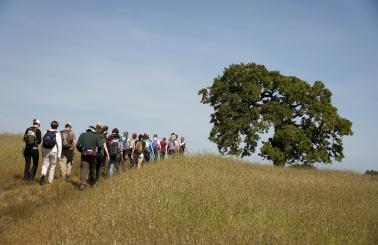
Since its inception in 1975, the 20 week field course “Ecology and Natural History of Jasper Ridge Biological Preserve” has trained hundreds of JRBP'O'O docents over the years. While there... more
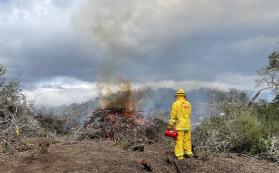
After months of planning, the first week of March provided an excellent prescription window for pile burning at Jasper Ridge Biological Preserve - 'Ootchamin 'Ooyakma (JRBP'O'O) with nearly 200 piles burned! Pile burning was selected as one... more
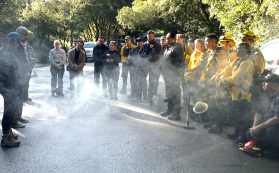
We were thrilled to have members of the Muwekma Ohlone Tribe of the San Francisco Bay Area participate in the initiation of pile burning at Jasper Ridge Biological Preserve - 'Ootchamin 'Ooyakma on Monday,... more
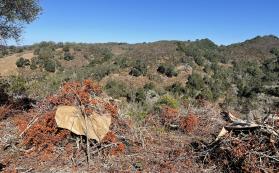
Following the Jasper Ridge Biological Preserve – 'Ootchamin 'Ooyakma (JR'O'O) Recommendations for Merging Fire Fuel Mitigation with Stewardship Practices white paper, we are ready to reintroduce good fire back to the... more
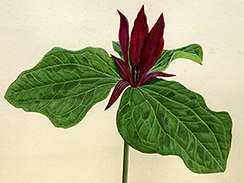 The paintings in this collection of wildflower watercolors were done by Herb Dengler in the 1980s and 1990s from specimens gathered on Jasper Ridge Biological Preserve. They are printed on an Iris printer in a limited edition of 250, each numbered and containing an engraved authentication. Learn more about purchasing Herb Dengler wildflower prints